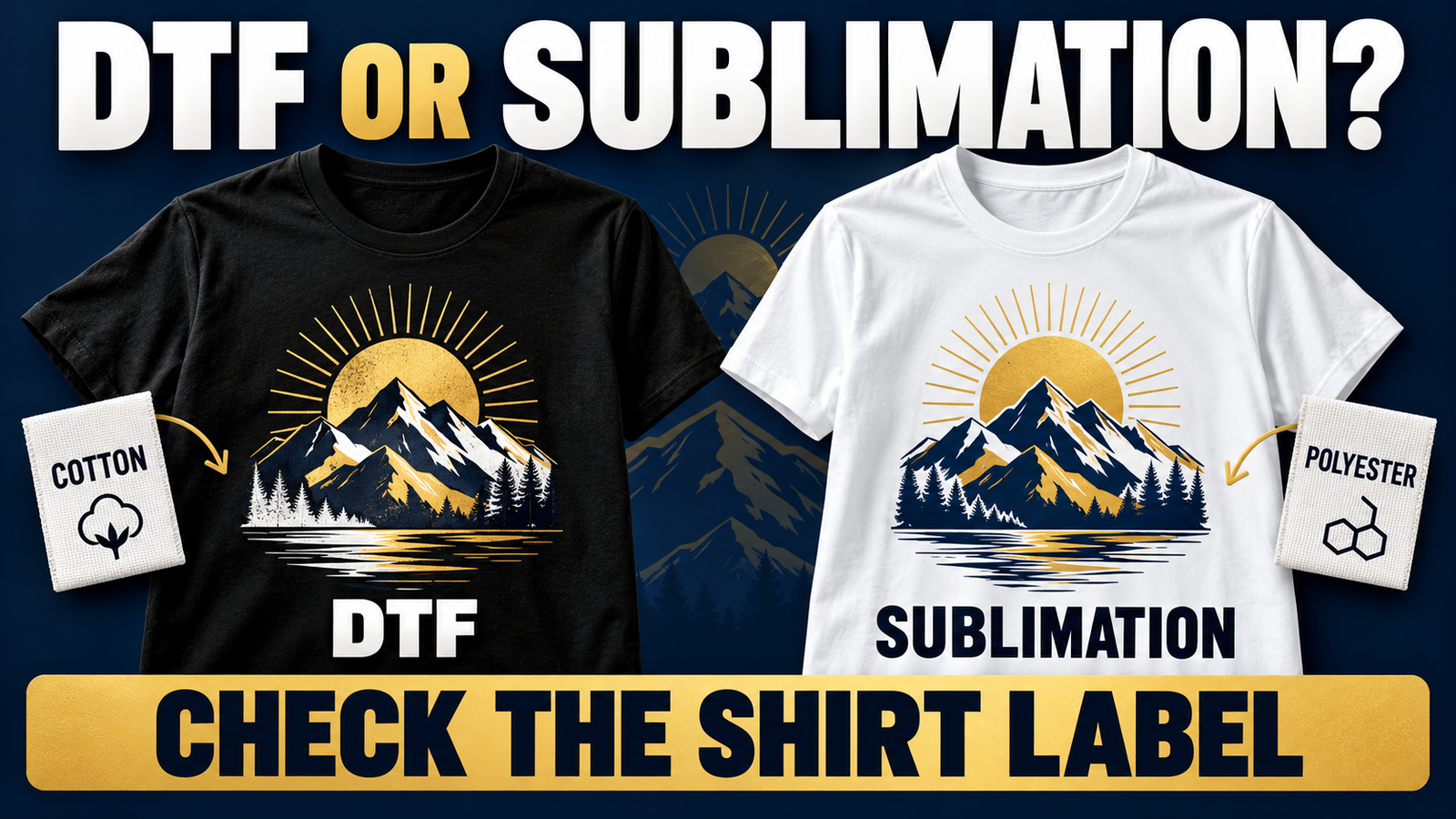
When comparing DTF vs sublimation, start with the shirt label. It tells you what the shirt is made of. Then check its color. Those two details can help you avoid buying supplies that do not fit your order.
You do not need complicated words. Choose the shirt first. Then find a method that works with it. This guide compares options; it does not report our own shop tests.
The quick answer
- White polyester shirt: check a suitable sublimation option.
- Black cotton shirt: look for a DTF transfer approved by its maker for that garment.
- Unknown fabric: stop before buying. Ask for a photo of the label.
This is a starting point, not a recipe for every garment. Always confirm the exact product you plan to use.
Two names, in plain words
DTF: a design is prepared on a film and moved to the shirt with heat. You can order the printed transfer from a supplier and apply it using that supplier’s instructions.
Sublimation: a design printed with special ink moves from paper to a material made to receive it. Any printer, paper and shirt will not automatically work together.
What manufacturers say
Epson recommends white or light polyester for conventional sublimation. Transfer Express lists cotton, polyester and blends among the supported fabrics for UltraColor Max DTF. That approval belongs to that product. It does not make every transfer suitable for every fabric.
A new option for cotton needs a separate process
“Cotton can never be sublimated” is too broad. On September 23, 2026, Epson announced a liquid preparation for white or light cotton, with availability planned for November. It adds another process; untreated cotton does not become the same as polyester. Check availability and instructions before buying.
Sources checked November 1, 2026. We have not tested that new product ourselves.
Match the order before paying
| Your shirt | Check first |
|---|---|
| White or light polyester | A sublimation process approved for that garment |
| Black cotton | DTF approved for the fabric and color |
| White cotton | DTF or a specific cotton sublimation system, following its instructions |
| Blend or unknown fabric | The label and written supplier confirmation |
Ask your supplier these five questions
- Is this product suitable for my shirt’s fabric and color?
- What will the finished design size be?
- Which application instructions should I follow?
- How should I wash the shirt, and when can I wash it?
- What is the whole order price, including shipping?
Send a label photo too. Save the answer. If the customer changes the shirt or design size, ask again.
Make one sample before the whole order
Follow the exact product instructions. Time, heat, pressure and when to remove the film can vary. Do not borrow a recipe from another material.
Check the design, edges and shirt. Carry out the washing test advised by the supplier. Show the sample to the customer and agree on the result before making the rest.
Which method leaves more money?
The method name cannot answer that. Add the blank shirt, print, your work, tests, packaging, shipping and selling fees. Compare the same design size and order quantity.
Try the free t-shirt pricing calculator →
Next, compare small and large print costs and avoid pricing mistakes that reduce your earnings.
Choose the artwork next
Explore the free design catalog once you know the garment and method. Preview pictures are examples; print with the file from the pack. A free download does not automatically grant commercial rights. Check the artwork license and permissions for any brands or characters.
The cover is an AI-created illustration of the comparison, not a photograph of real product tests or a promise about the finished print.
Keep exploring

7 T-Shirt Pricing Mistakes That Eat Your Earnings

Small vs Large DTF Print Cost: A Clear Pricing Example

US$100 a Day Selling T-Shirts? See How Many You Need to Sell
Buy a DTF Printer or Order Transfers? Compare the Full Cost
How Much to Charge for 25 T-Shirts: Step by Step